Commercial Waste in Ealing for organised business clearance and disposal

Commercial Waste Ealing provides a straightforward service for businesses that need regular or one-off removal of unwanted trade waste in Ealing. The practical aim is simple: keep workplaces clear, separate recyclable material where possible, and move different waste streams into the right handling route. That can include mixed office waste, packaging, confidential paper for shredding, appliance disposal and heavier items that are awkward to move without proper planning.
For many customers, the most useful part of the service is having one place to arrange the collection of different waste types without turning disposal into a separate project. We keep the work focused on the items you need removed, the access available at the property, and any handling notes that matter for safe lifting or segregation. If you are comparing options, start with the kind of waste you need taken away and then match it to the right service page or enquiry route.
Our approach suits offices, shops, landlords, managing agents, and other commercial premises that need tidy removal rather than a one-size-fits-all assumption. Clear descriptions help because business waste can vary from light paper and cardboard to bulky fixtures, old furniture and specialist items. If you want to move quickly, a brief outline of the waste type, the quantity and access details is usually enough to begin. You can also request a quotation once you have identified the most relevant removal type.
Business waste removal for offices, shops and shared premises
Regular business waste removal is usually about keeping day-to-day operations uncluttered and making sure discarded material is handled in a suitable way. That can involve routine collections from offices, small retail units, studios, workshops and shared workspaces. The work may cover sacks, cartons, archive material, general non-hazardous rubbish and mixed contents that have accumulated during normal trading or a clear-out.
Where business waste is mixed, the main decision is often whether items should be separated before collection. Cardboard, metals, reusable furniture, electronics and confidential paperwork may each need different handling. Our service pages help you choose the right route for the type of waste involved, including business waste removal for general commercial clearances and confidential shredding where documents need secure destruction rather than ordinary disposal.
Choosing the right disposal route
When waste is mainly office-based, the job can often be planned around access times, lift usage, loading space and the amount of sorting already done on site. If the load contains a few categories only, separation is simpler. If it contains many different materials, it helps to decide in advance what stays, what is recycled and what needs special handling. For heavier clearances, a descriptive service page such as waste removal can be a useful starting point before you decide whether a more specific route is better.
Office clearance and furniture disposal

Office clearance usually involves more than moving desks and chairs. A full or partial clearance may include cabinets, shelving, screens, reception items, small electricals, boxed paperwork, packaging and redundant fixtures that no longer suit the layout of the workplace. The useful outcome is a clearer office floor with the unwanted pieces taken away in an organised way rather than being left in corridors or storage corners.
Where desks, task chairs, meeting tables and storage units are being replaced, it is often practical to plan the clearance alongside the furniture changeover. That reduces handling twice and makes it easier to separate reusable items from broken or end-of-life pieces. Our related pages for office clearance and furniture disposal describe the kind of work involved when commercial furniture must be removed carefully and disposed of responsibly.
If your premises are occupied while the work happens, think about aisle width, lift access, desk cabling and any items that should remain in place. A short list of what is going, what is staying and what needs to be dismantled can make the job smoother. When the furniture includes larger one-piece items, it can be helpful to review furniture clearance as a broader option for bulky contents that are not limited to office use.
Bulky item disposal for premises with limited storage
Some commercial clearances are dominated by items that are too large for normal bins or awkward to store until collection day. That can include old sofas in staff rooms, mattress disposal from serviced accommodation, display units, broken storage furniture or mixed bulky refuse from void commercial spaces. The key consideration is usually safe movement through the building and sensible separation of items that may be reused, recycled or disposed of.
For this kind of work, a customer often benefits from choosing a service page that matches the item type rather than describing everything as general rubbish. Mattress and sofa disposal is suitable for soft furnishings and other large domestic-style pieces found in commercial premises, while fridge and appliance removal is a better fit where cold appliances, cookers or similar equipment need special handling.
It also helps to think about the route from the item’s location to the loading point. Stair turns, narrow doorways, basements and shared entrances can affect the order in which items are moved, especially when the clearance includes both light and heavy pieces. If the load is a mixture of furniture and general rubbish, a single planned collection is often easier than making several separate arrangements. Begin with the bulkiest items so that the rest of the clearance can be organised around them.
Clearance for storage areas, garages and loft spaces
Commercial properties do not only generate waste in offices or customer areas. Stores, basements, plant rooms, roof spaces and back-of-house storage can all fill up with redundant material over time. These spaces often hold a mix of files, packaging, spare fixtures, broken equipment and forgotten stock. A targeted clearance frees the area for more practical use and makes it easier to see what remains.
When the space is tucked away from the main entrance, access becomes part of the planning. The route through the property may involve steps, low headroom, narrow ladders or tight corners, so the clearance should be discussed with those features in mind. Relevant pages such as garage clearance and loft clearance can help you match the work to the space, while home clearance and house clearance are useful if the premises combine residential and commercial uses.
A sensible preparation step is to identify anything with ongoing value or compliance significance before the removal starts. That might include records, product stock, equipment manuals or items that belong to another tenant. After that, the rest can usually be described by category rather than individually. One clear inventory is enough; there is no need to overcomplicate the enquiry with every single object unless the contents are highly varied.
Waste removal for mixed commercial clear-outs
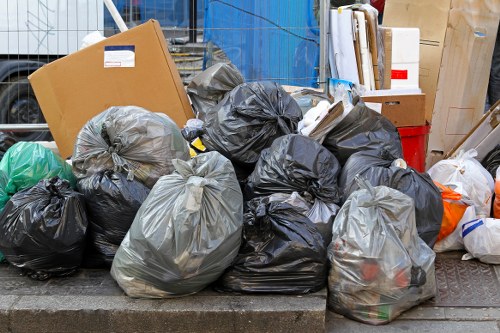
Mixed clear-outs happen when different waste types build up together and no single category covers the job neatly. A site might contain office furniture, packaging, obsolete equipment, loose rubbish, and a few items that need specialist handling. In that case, the service has to be practical rather than decorative: identify what is there, decide what should be removed first, and make sure the collection plan suits the premises.
For broader jobs, it can be useful to compare the narrower service pages first, then fall back on the wider route where needed. Waste removal suits general mixed contents, while builders waste clearance may be the better fit where the material comes from refurbishments, strip-outs or site works. If the waste is light but frequent, a recurring commercial collection may be more sensible than a one-off clear-out.
What to think about before collection
The main practical questions are usually quantity, access and material type. Quantity helps determine how much loading time is needed. Access tells you whether the items can be taken directly from the point of storage or whether they need to be moved through shared areas. Material type determines whether anything should be separated in advance. A simple set of photos can be useful for complex jobs, but it is not a requirement for every request; a concise written description can often be enough.
Builders waste clearance for refurbishments and strip-outs
Refurbishment projects and light commercial strip-outs can generate waste quickly. Broken plasterboard, timber offcuts, old fixtures, packaging, tile fragments and mixed renovation debris can take over a site before the work is finished. Builders waste clearance is designed for that sort of material, with attention on keeping work areas usable and removing debris that would otherwise slow the next stage of the job.
Different refurbishment jobs produce different waste profiles. Some are dominated by inert material and timber; others include old office fittings, carpet underlay, redundant storage and assorted renovation leftovers. A service page such as builders waste clearance is useful where the task is tied to construction or strip-out activity, while office clearance may suit refurbishments that are mainly about replacing commercial interiors rather than demolishing them.
Because renovation waste can be mixed and bulky, sorting it in advance can save time. Keep hazardous items apart, identify anything reusable, and note if the clearance must happen around contractors still working on site. The more accurately the waste is grouped, the easier it is to organise the removal without affecting the rest of the schedule. Clarity at the start usually prevents avoidable delays later.
Specialist handling for appliances and higher-risk waste
Some commercial premises produce waste that needs more care than ordinary mixed rubbish. Fridges, freezers and similar appliances can contain components that need proper handling, while other waste streams may call for additional caution because of weight, contents or contamination. The right approach is to identify the item type clearly and avoid placing specialist materials into a general load by default.
Where the job includes electrical appliances, fridge and appliance removal gives a more accurate fit than general waste disposal. If the material is potentially hazardous, the better route may be hazardous waste disposal, which is intended for items that should not be treated as routine commercial rubbish. That distinction matters because not every unwanted object belongs in the same collection stream.
In practical terms, the best step is to separate items by category before the collection day and note any obvious issues such as leaks, damage or mixed contents. Avoid mixing appliances with loose rubbish unless the service specifically suits that combination. Where specialist waste is present, the collection conversation should focus on what the item is, how many there are and where they are stored. Accurate labelling helps more than broad descriptions do.
Prices, quotes and arranging the right service

Commercial waste pricing usually depends on the type of material, the volume involved, loading difficulty, access conditions and whether the job includes any specialist handling. A straightforward office clearance is not priced in the same way as a mixed refurbishment load or a secure shredding request. The most useful quotation is one that reflects the actual work rather than a rough guess based on the name of the premises.
The pages at pricing and quotes and book online can help when you are ready to move from description to arrangement. If you want to understand what can be accepted in a lorry or bulk collection, what can go in a skip offers a useful comparison point even where you are choosing a service-led removal rather than a container hire approach. For a final check, you can also request a quotation in plain language, without producing a long explanation.
A clear quotation request usually includes the property type, the waste category, approximate quantity and any access notes that may affect loading. If the load contains a number of different item types, you can keep the request simple by listing the largest or most awkward pieces first. That gives a better starting point than a vague “mixed waste†note alone. For the quickest response, tell us what needs removing and where it is located, then choose the service page that best matches the main item type.
About Ealing
Ealing is a large district in west London and the name is used for both the historic settlement and the wider London Borough of Ealing. The older core developed around the parish church of St Mary’s and the main route west from London, while later growth brought rail links, suburban streets and substantial civic expansion. The area contains a varied townscape that ranges from older high streets and Victorian terraces to later twentieth-century development, with the centre retaining a recognisable metropolitan-suburban character. Ealing Broadway is one of the best-known focal points, combining shopping streets, transport connections and a busy urban centre. The district also includes notable green spaces such as Walpole Park and Ealing Common, giving the area a balance between built-up streets and open ground. Film history is another part of its identity: the Ealing Studios name is widely associated with the district and with British cinema culture. Several churches, schools and public buildings reflect the area’s long growth, while conservation areas and mature avenues preserve much of the older suburban layout. The borough as a whole stretches across a number of neighbourhoods, so Ealing itself is best understood as one part of a larger west London landscape rather than a single uniform centre. That mix of transport, history, parks and residential streets gives the place a layered character that is easy to recognise yet difficult to reduce to one theme alone.
Commercial clearance choices for Ealing premises
Choosing the right service often comes down to the kind of items you want removed and how the premises are used. A retail unit clearing stock and display fittings has different needs from a shared office dealing with paperwork and old chairs, and both differ again from a building project producing renovation debris. Matching the waste to the service page keeps the enquiry accurate and helps avoid unnecessary back-and-forth before collection.
For softer items and bulky furnishings, mattress and sofa disposal and furniture disposal give clear routes for items that are too large for routine waste handling. For records and sensitive paperwork, confidential shredding is the more suitable option. Where you are dealing with a broader commercial mix, start from business waste removal and then narrow the request if the waste turns out to be more specialised.
If the collection involves more than one category, decide which is the main one and mention the rest as secondary items. That is usually enough to guide the conversation without turning the request into a long inventory. The aim is to keep the disposal process predictable, reduce clutter and make sure each material follows the right route. If you are ready to go ahead, send the main details and ask for a quotation.
Useful preparation for commercial collections
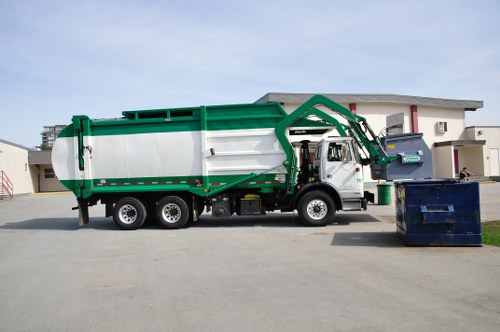
Good preparation does not need to be elaborate. In many cases, the most helpful step is simply to gather the waste into one place or mark the rooms and storage areas where items are kept. That allows the clearance to begin efficiently without repeated checks across the building. If something must stay on site, make that clear early so it is not moved by mistake.
There are a few practical points worth keeping in one place. First, separate anything confidential, hazardous or reusable. Second, tell us about stairs, lifts, loading bays or restricted access. Third, note whether the job is a single visit or part of a wider project, such as a refit or relocation. Fourth, if the premises are shared, identify any time windows that matter for tenants or building management. These points are enough for most commercial enquiries and they avoid overcomplicating the request.
When you are ready to proceed, the most useful next step is to choose the page that matches your waste type and then ask for a quotation in straightforward terms. You do not need to describe the whole history of the premises; a clear summary of the items, quantity and access is usually enough. If you want support with an organised commercial collection in Ealing, make your request now and we can help you move from clutter to a clear plan.